
How Plastic Helped Elephants, But Hurt Fish
- Jill Hardee
- Jun 8, 2022
- 3 min read

As you read you're going to find some Amazon links, but only when they're relevant and helpful. I earn a small commission when you click and purchase from these links at no cost to you. That helps to keep this blog running and gives you an easy way to find something you may find useful.
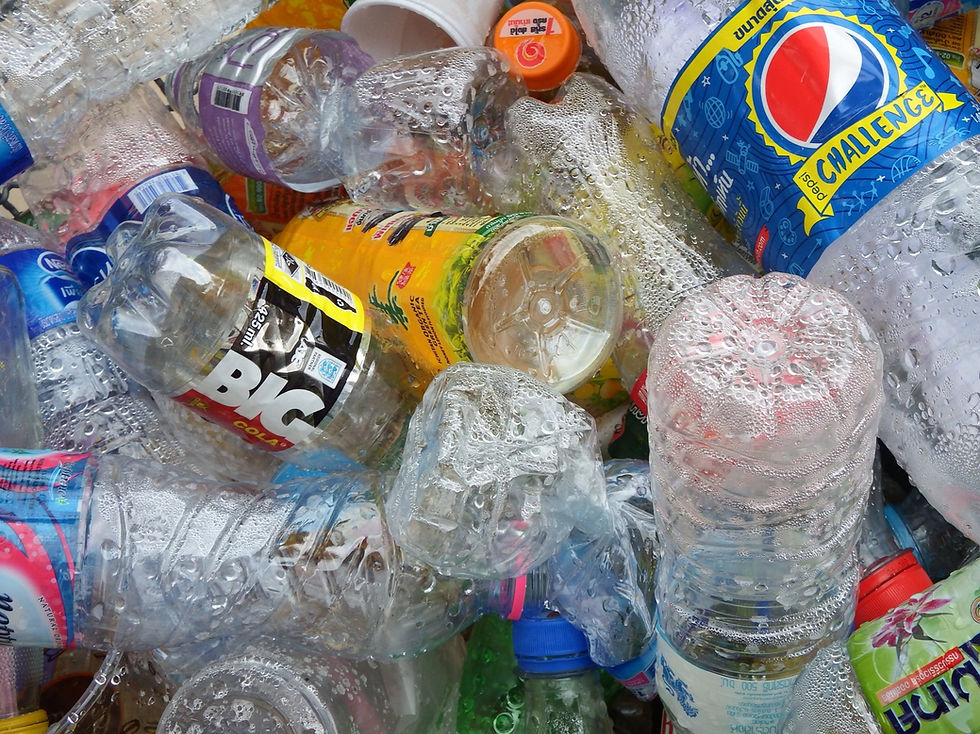
You already know plastics are filling our oceans. In fact, it's filling our oceans so swiftly that in 2050 plastic waste is expected to outweigh fish. Even recycling programs only slow this problem rather than prevent it entirely because plastics can only be recycled a few times before the material loses its structural integrity and is no longer useful.
But maybe you're less clear on how we got here. For that let's have a look back. The year is 1869. An enterprising man named John Wesley Hyatt is looking to solve the age-old problem: how do we keep making billiard balls without killing elephants?
Why, billiards had become so popular, and slaughtering elephants for their ivory tusks so frequent that the supply was becoming thin. To remedy this, a New York firm had a little contest. The inventive individual who could come up with a replacement material for billiards would be the recipient of $10,000.

A while later, in 1907, another man, Leo Baekeland, was busy inventing a plastic that, unlike Hyatt's plastic, didn't need any molecules from nature.
But at least Hyatt had saved the elephants, with one major caveat; the United States remained the biggest importer of ivory until just before WWII. Because pianos.

Plastic sort of took off from there. It was used extensively in WWII to make anything from ropes and parachutes to helmet liners and aircraft windows.
Well after the war ended, the United States was finally enjoying a financial boom. They were having babies, buying homes, and buying a whole lot of plastic. It was cheap, it was sanitary, and there was no end to the supply of plastic. Unlike elephants, plastic was easy to find, hold the slaughter.
Plastic can refer to something that is easily shaped, but it slowly started to have the connotation that something was cheap and flimsy. As the 1970s and 80s rolled around people started noticing the pile up of plastics. It wasn't going away. Like someone that pops in without texting first, plastic has overstayed its welcome.
It was evident from every plastic bag snagged on a tree limb to every turtle ensnared in plastic beverage rings.

Since then, the convenience of plastic has been marred by the harm it causes to the environment. Now, as in 1869, we're faced with a problem; plastics are harming animals and our environment, and we're looking for a solution.
I can't offer a $10,000 reward, but I'll offer this: an idea and a giveaway.

First for the idea; if you're not already using a reusable water bottle, get yourself a nice one. Spare no expense. Yeti, Hydroflask, HydroJug.
Let's run the numbers. An average plastic water bottle is 20 oz. If you purchase them on the fly they can run about $2 each. Let's say you buy a Yeti that holds 26 oz. You fill it twice a day. That's a conservative estimate, you're only getting 52 oz (it's supposed to be 64!). Anyway, this 52 oz is roughly 2.5 of those 20 oz bottles. You've saved $5! Good work.
You keep it up for a week, and congratulations you've saved $35 (you are hydrated on the weekend too). At this rate you're only 285 weeks away from saving as much money as Hyatt won when he invented his elephant-saving (not really) plastic.
Maybe you need one more thing; a stylish bottle bag to hold your fancy plastic-free hydration machine. You can get one here:
Or you can share where you take your reusable water bottle on Instagram with the hashtag #StitchSowDitchPlastic for a chance to win one!
Research Stuff (Also linked where relevant in the article)


Comments